
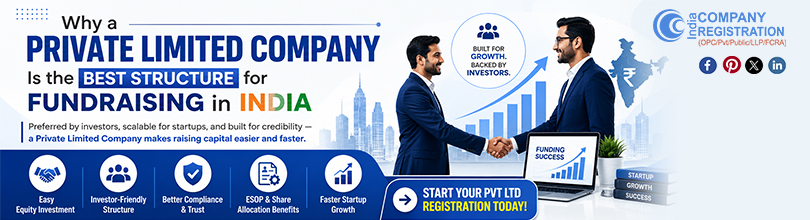
Introduction to Fundraising in India
Fundraising has become an essential part of building and scaling businesses in India, especially for startups and growing companies looking to expand their operations, develop new products, or enter competitive markets. With the rapid growth of the Indian startup ecosystem, investors such as angel investors, venture capital firms, private equity funds, and financial institutions are actively searching for businesses with strong growth potential. However, one of the most important factors to evaluate before investing is the legal structure of the business.
Choosing the right business entity plays a major role in attracting investment and ensuring smooth fundraising activities. Among all available business structures, a private limited company for fundraising is considered the most preferred option in India. This structure offers legal recognition, limited liability protection, structured ownership, and the flexibility to issue shares to investors. These features make it easier for startups and businesses to raise capital at different growth stages.
A private limited company also creates greater transparency and credibility, which helps build investor confidence. Whether a business is seeking seed funding, venture capital investment in India, or long-term expansion capital, a private limited company provides the legal and operational framework needed for successful fundraising in India.
What Is a Private Limited Company?A private limited company is a privately owned business entity registered under the provisions of the Companies Act, 2013, in India. It is one of the most popular business structures for startups, entrepreneurs, and growing businesses due to its legal recognition and fundraising advantages. A private limited company has a separate legal identity from its owners, which means the company can own assets, enter contracts, and conduct business activities in its name.
The liability of shareholders is limited to the amount invested in the company, this protects their personal assets from business liabilities. A private limited company also allows businesses to raise funds by issuing shares to investors, making it a preferred choice for startups seeking external investment.
To register a private limited company in India, a minimum of two directors and two shareholders are required. This business structure provides better credibility, easier ownership transfer, and a structured management system, making it highly suitable for long-term business growth and fundraising opportunities.
Why Business Structure Matters for Fundraising
The business structure of a company plays a major role in determining its ability to attract investors and raise funds successfully. Investors do not only evaluate a business idea or revenue potential; they also examine the company structure for investors before making investment decisions. A well-structured business provides transparency, legal protection, and clear ownership rights, which are essential for investor confidence.
In India, fundraising through private limited company is widely preferred because it offers a formal corporate structure with defined compliance and governance standards. This structure allows businesses to issue shares, bring in multiple investors, and manage ownership efficiently. It also ensures limited liability protection for shareholders and creates a clear distinction between personal and business assets.
On the other hand, structures like sole proprietorships or traditional partnerships may face limitations in raising external capital due to the absence of equity-sharing mechanisms and lower investor trust. Therefore, choosing the right business structure directly impacts fundraising opportunities and long-term scalability.
Private Limited Company vs Other Business Structures for FundraisingChoosing the right business structure is very important for attracting investors and raising capital efficiently. Among all business entities in India, a private limited company is considered the most suitable structure for fundraising. Unlike a sole proprietorship, where the business and owner are legally the same, a private limited company has a separate legal identity and allows equity investment through share issuance. Traditional partnership firms also face limitations because ownership transfer and investor participation are less structured.
Although a Limited Liability Partnership (LLP) provides limited liability protection, venture capital firms and angel investors generally prefer private limited companies due to their clear shareholding system and better investment flexibility. A private limited company also offers stronger corporate governance, legal transparency, and easier access to multiple rounds of funding. These advantages make it more suitable for startups and growing businesses planning long-term expansion, investor onboarding, and large-scale fundraising opportunities in India.
Advantages of a Private Limited Company for FundraisingA private limited company offers several benefits for startups and growing businesses seeking external investment. These private limited company advantages help improve investor confidence, transparency, legal protection, and long-term business scalability.
- A private limited company has its own legal identity, separate from its owners, which increases investor confidence and business credibility.
- Shareholders are liable only up to the amount they invest, protecting their personal assets from business losses or liabilities.
- The company can raise capital by issuing equity shares, preference shares, and convertible securities to investors.
- Angel investors, venture capital firms, and private equity investors usually prefer investing in private limited companies due to their structured governance system.
- Registration under the Companies Act, 2013, improves trust among investors, banks, financial institutions, and clients.
- Shares can be transferred more easily compared to other business structures, making investment entry and exit smoother.
- A private limited company can raise seed funding, venture capital, and expansion capital at different growth stages.
- Clear ownership records and shareholding patterns help maintain transparency during fundraising.
- The structure is suitable for startups and businesses planning long-term expansion and large-scale investment.
- Eligible private limited companies can apply for Startup India recognition and access various tax benefits and government schemes.
- Mandatory compliance, audits, and reporting requirements create transparency and increase investor trust.
- Foreign investors generally prefer private limited companies because of their regulated legal framework and investment flexibility.
Easy Equity Investment and Share Allotment
One of the biggest advantages of a private limited company is the ease of raising funds through equity investment and share allotment. This business structure allows companies to issue shares to investors in exchange for capital, making it highly suitable for startups and growing businesses seeking external funding and equity fundraising in India. Investors receive ownership in the company based on the number of shares allotted to them, creating a clear and transparent investment structure.
A private limited company can issue different types of securities, such as equity shares, preferred shares, and convertible instruments, depending on business requirements and investor agreements. This flexibility helps companies attract angel investors, venture capital firms, and private equity investors at different stages of growth.
The share allotment process is also legally regulated under the Companies Act, 2013, which ensures transparency and protects investor interest. Proper shareholding records, valuation mechanisms, and compliance procedures further strengthen investor confidence, making a private limited company for fundraising a preferred choice in India.
Venture Capital and Angel Funding OpportunitiesA private limited company provides excellent opportunities for businesses to raise funds from angel investors and venture capital firms in India. Most professional investors prefer investing in private limited companies because this structure offers transparency, legal protection, and a clear shareholding framework. Startups looking for early-stage funding and venture capital funding in India often choose this business model to improve their chances of securing investment.
Angel investors usually provide seed capital to startups with innovative business ideas and growth potential. A private limited company creates a reliable structure for securing angel investment for startups by offering proper shareholding records and legal compliance. As the business expands, venture capital firms may invest larger amounts to support scaling, technology development, marketing, and market expansion. A private limited company for fundraising makes these investments easier by allowing the issue of equity shares and convertible securities.
Additionally, investors gain confidence due to mandatory compliance requirements, audited financial records, and proper corporate governance. The structured nature of a private limited company also simplifies valuation, ownership transfer, and investor exit options. These factors make it the most preferred structure for startups seeking venture capital and angel funding opportunities in India.
Ability to Raise Multiple Rounds of FundingA private limited company offers businesses the flexibility to raise multiple rounds of funding as they grow and expand. Startups often require capital at different stages, including seed funding, early-stage investment, growth funding, and expansion capital. The structured legal framework of a private limited company makes it easier to attract investors throughout each stage of business development.
In the initial stage, businesses may receive seed funding from founders, family members, or angel investors. As the company grows, it can raise Series A, Series B, and further rounds of funding from venture capital firms and institutional investors. A private limited company for fundraising supports these investments through proper share issuance, valuation mechanisms, and legally recognized shareholder agreements.
The ability to issue additional shares and onboard new investors without affecting the company's legal existence is a major advantage. This structure also ensures transparency in ownership and financial reporting, which helps maintain investor confidence during successive fundraising rounds and long-term business scaling.
Share Transferability and Exit Flexibility
A private limited company offers better share transferability and flexible exit options for investors, making it highly attractive for fundraising in India. Investors generally prefer businesses where ownership can be transferred smoothly without complex legal obstacles. In a private limited company, shares can be transferred from one shareholder to another according to the company's Articles of Association and shareholder agreements.
This flexibility benefits both founders and investors during fundraising and future business expansion. Investors can exit their investment through share transfers, buybacks, mergers, acquisitions, or strategic sales, depending on the company's growth and market opportunities. Such exit mechanisms increase investor confidence because they provide a clear path for recovering returns on investment.
A private limited company for fundraising also allows businesses to bring in new investors without disrupting company operations. The structured shareholding system ensures transparency in ownership changes and helps maintain proper legal records. This combination of transferability and investor-friendly exit options makes private limited company a preferred structure for long-term investment and business growth.
Tax Benefits and Government RecognitionA private limited company enjoys several tax benefits and government recognition opportunities that support business growth and fundraising in India. Startups registered as private limited companies can apply for recognition under the Startup India initiative introduced by the Government of India. Eligible startups may receive benefits such as tax exemptions, easier compliance procedures, and access to government-backed funding schemes.
Under certain conditions, recognized startups can claim tax exemptions on profits for a specified period under the Income Tax Act. They may also receive exemptions on investments above fair market value and benefit from faster patent registration and reduced filing fees. These incentives help businesses conserve capital and improve financial stability during the early stages of growth.
A private limited company for fundraising also gains better credibility with investors because government recognition reflects legal compliance and operational transparency. Financial institutions, venture capital firms, and angel investors are more likely to invest in companies that operate within a recognized regulatory framework and have access to official startup benefits and incentives.
Compliance and Legal Transparency
Compliance and legal transparency are important factors that influence investor confidence during fundraising. A private limited company is required to follow various legal and regulatory compliances under the Companies Act, 2013, which helps maintain accountability and transparency in business operations. These compliance requirements create a structured corporate environment that investors generally prefer.
A private limited company must maintain proper financial records, conduct statutory audits, file annual returns with the Registrar of Companies (ROC), and comply with board meeting and shareholder meeting requirements. These procedures ensure that the company's financial and operational activities are properly documented and legally verified.
A private limited company fundraising benefits from this transparent system because investors can easily review financial statements, ownership details, and compliance records before investing. Legal transparency reduces the risk of disputes and increases trust among shareholders and financial institutions. It also helps startups and growing businesses build a professional image in the market, making it easier to attract venture capital, angel investment, and long-term business partnerships.
Role of Shareholding Structure in FundraisingThe shareholding structure of a company plays a significant role in successful fundraising. Investors carefully examine the ownership distribution before investing in a business. A well-organized shareholding pattern creates transparency and helps investors understand founder control, equity allocation, and future dilution possibilities.
A private limited company fundraising provides a structured framework for managing shares among founders, investors, and employees. It also allows businesses to issue additional shares during future funding rounds without major legal complications. Proper cap table management and clearly defined shareholder rights improve investor confidence and support smoother negotiations during fundraising, mergers, acquisitions, and expansion activities.
Common Mistakes Startups Make While Raising Funds
- Choosing the wrong business structure
- Poor financial record management
- Lack of legal compliance
- Incorrect business valuation
- Weak business plan or pitch deck
- Ignoring shareholder agreements
- Not protecting intellectual property
- Raising funds without a growth strategy
- Giving away excessive equity early
- Targeting the wrong investors
- Lack of transparency with investors
- Ignoring due diligence preparation
- Poor cash flow management
- Failure to build investor confidence
- Not structuring the company properly for fundraising
- Maintain proper financial records
- Ensure legal and ROC compliance
- Create a strong business plan
- Prepare an impressive pitch deck
- Build a clear shareholding structure
- Protect intellectual property
- Strengthen corporate governance
- Develop scalable business operations
- Maintain tax compliance
- Show consistent revenue growth
- Build a skilled management team
- Be transparent with investors
- Keep due diligence documents ready
- Focus on market position and branding
- Plan future funding rounds carefully
A private limited company is widely regarded as the best business structure for fundraising in India due to its legal recognition, structured governance, limited liability protection, and flexibility in raising equity investment. From attracting angel investors and venture capital firms to supporting multiple funding rounds, this structure provides businesses with strong growth opportunities and investor confidence.
A private limited company for fundraising also ensures better transparency, compliance, and credibility, which are essential for long-term business success. For startups and entrepreneurs planning to scale their operations and secure external investment, choosing a private limited company can create a strong foundation for sustainable growth and future expansion.
Frequently Asked Questions (FAQs)
A private limited company is preferred because it allows businesses to issue shares, attract investors, maintain legal transparency, and raise multiple rounds of funding efficiently.
Yes, most venture capital firms prefer investing in private limited companies due to their structured governance, compliance standards, and equity-sharing flexibility.
It creates investor confidence through limited liability protection, proper compliance, transparent ownership records, and legally recognized shareholding structures.
A private limited company can raise seed funding, angel investment, venture capital funding, private equity investment, and expansion capital.
Angel investors prefer private limited companies because they offer equity participation, investor protection, legal transparency, and easier exit opportunities.
Yes, private limited companies can issue equity shares, preference shares, and convertible securities to investors.
A clear shareholding structure improves transparency, defines ownership rights, and helps investors assess future dilution and control.